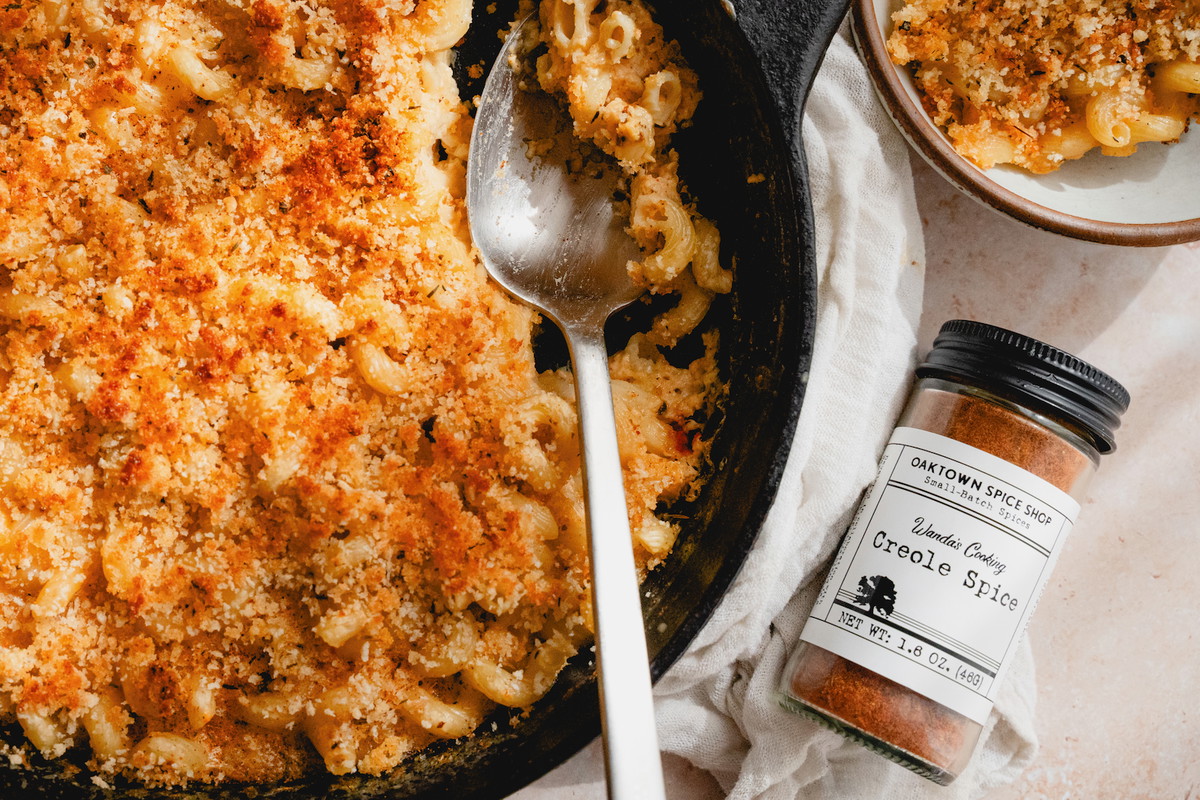
Macaroni and cheese may be the ultimate comfort food, with a background deeply ingrained in early American history. The oft repeated tale is that Thomas Jefferson encountered the dish in Europe and brought it back to the US, even importing a macaroni-making pasta extruder from Naples to try to make his own noodles stateside. The real story isn’t so simple.
A dish called “makerouns” or “macrows” appeared in a circa 1390 cookbook, The Form of Cury, written by the chief cooking staff of England’s Richard II. Consisting of pasta sheets layered with butter and shredded cheese, it is widely considered the medieval ancestor to mac and cheese. The dish spread across France, Italy and England.
In 1784, Jefferson was sent to Paris as a US trade commissioner, and he later succeeded Benjamin Franklin as Minister to France. Jefferson brought his enslaved servant, James Hemings, to train as a chef. It was Hemings who was likely tasked with recreating Jefferson’s new favorite dish. While a handwritten macaroni recipe (for making the noodles) exists in Jefferson’s handwriting, it is generally believed to have been dictated to him by Hemings or another of Jefferson’s enslaved chefs, Edith Hern Fossett, who, along with Hemings, is one of the first ever American chefs trained in French cooking.
The traditional French recipe is made with a mornay sauce (a roux-based bechamel with cheese), however this recipe uses evaporated milk, cornstarch, and pasta water as the base of its sauce. An herbaceous hit from Wanda’s Cooking Creole Spice paired with the zip of mustard powder and the optional heat of cayenne will add a zesty warmth to your next meal.
Ingredients
Breadcrumb topping:
1/2 cup panko bread crumbs
2 tablespoons unsalted butter, melted
¼ teaspoon Creole Spice
Salt and pepper to taste
Macaroni:
8oz short pasta (elbows, shells, cavatappi, etc)
12oz can evaporated milk
4oz semi-firm flavorful cheese, such as sharp cheddar, preferably hand shredded
4oz semi-soft melting cheese, such as Monterey Jack, preferably hand shredded
1 tablespoon cornstarch
1 teaspoon Creole Spice
½ teaspoon mustard powder
¼ teaspoon tomato powder
¼ teaspoon cayenne (optional)
Salt and pepper to taste
1/2 cup reserved pasta water
Directions
Combine all ingredients for the breadcrumb topping and set aside.
Prepare the macaroni:
Bring a pot of salted water to a boil.
Shred both cheeses on the large holes of a box grater. Toss the shredded cheese with the cornstarch.
Bring the evaporated milk and spices to a simmer in a saucepan over medium-low heat, stirring occasionally to prevent the milk from scorching or forming a skin. Once simmering, turn off the heat and vigorously whisk in the cornstarch-coated cheese a handful at a time, letting the cheese melt before adding the next handful. Taste for seasoning; additional salt may or may not be needed depending on the types of cheeses used.
Boil the pasta in salted water for 1-2 minutes less than the package instructions. Reserve approximately ½ cup of the pasta water before draining. Add the pasta back to the pot, then add the cheese sauce and stir. For a firmer, casserole-type mac, add about ¼ cup of the reserved pasta water. For a saucier mac, add about ½ cup. At this point the sauce will be thinner than it will be in the finished dish. The pasta will finish cooking and the sauce will thicken in the oven.
Pour the pasta into a 3 quart baking dish or cast iron skillet. Top with the breadcrumb mixture and place under the broiler until the desired level of browning is reached.